ARCHITECTURE AND INTEGRATION
Architecture and integration
A platform designed to integrate with different systems, infrastructure and operational environments.
OPEN ARCHITECTURE
An open architecture for tailored solutions
C2LYNX is designed to integrate into different technology and operational environments, connecting uncrewed vehicles, sensors, communications systems and information sources in a shared platform.
Its modular, distributed architecture enables functionality to be adapted, technologies from different manufacturers to be integrated and specific solutions to be configured, without dependence on a single platform or infrastructure.
DEPLOYMENT OPTIONS
Adaptable to every operational environment
C2LYNX can be integrated into different configurations, from permanent control centres to mobile command posts and deployable systems. Its architecture allows each implementation to be adapted to the project’s infrastructure, operational and security requirements.
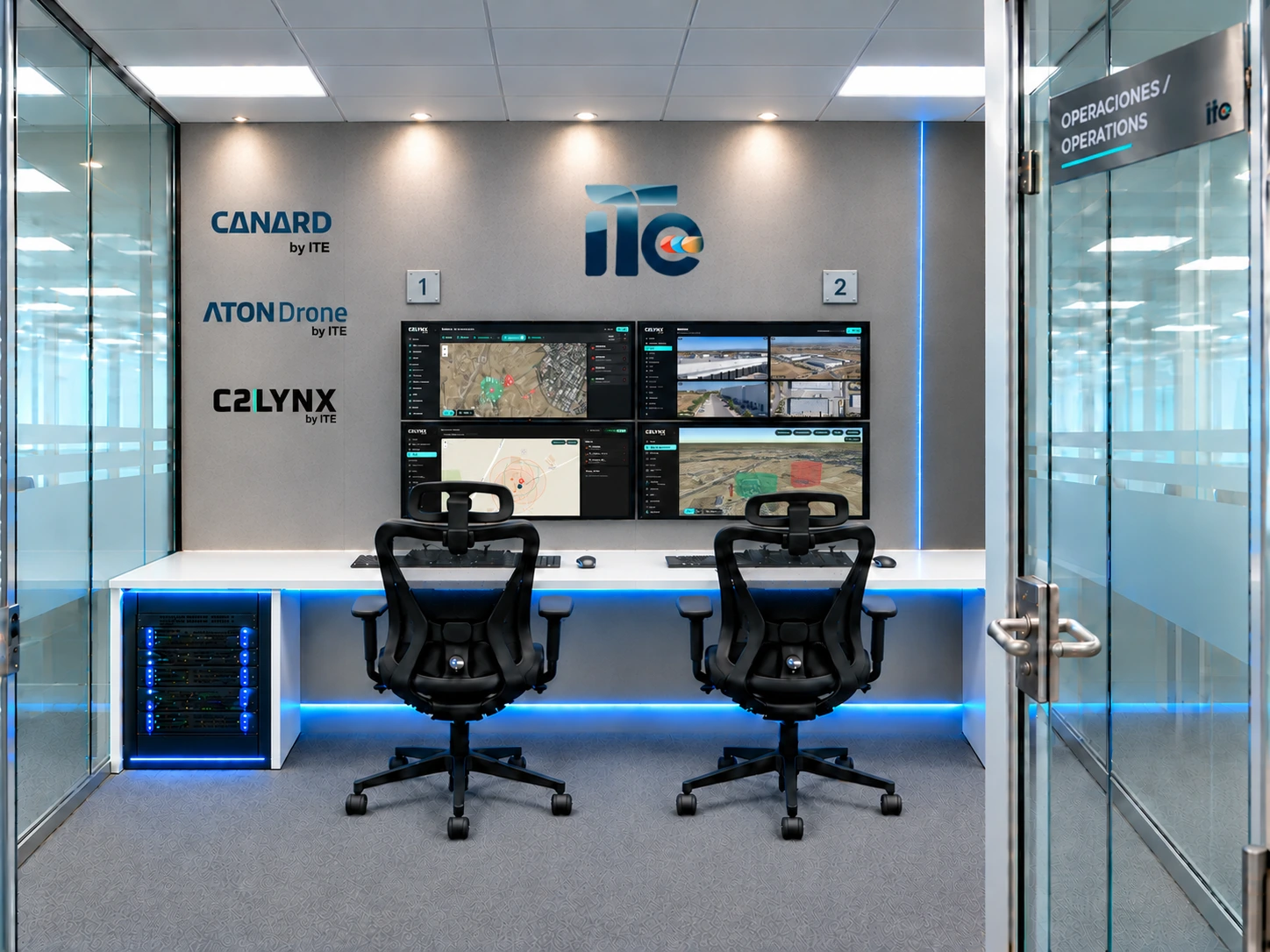
Fixed installations
Command centres and operations rooms with resource monitoring, coordination and control capabilities.
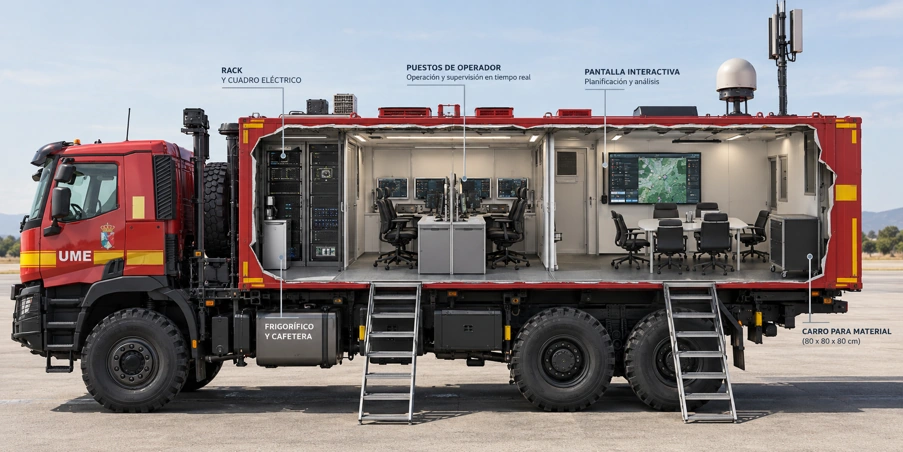
Mobile command posts
Integration into purpose-equipped vehicles, combining the C2LYNX platform with the systems and infrastructure required for each operation.
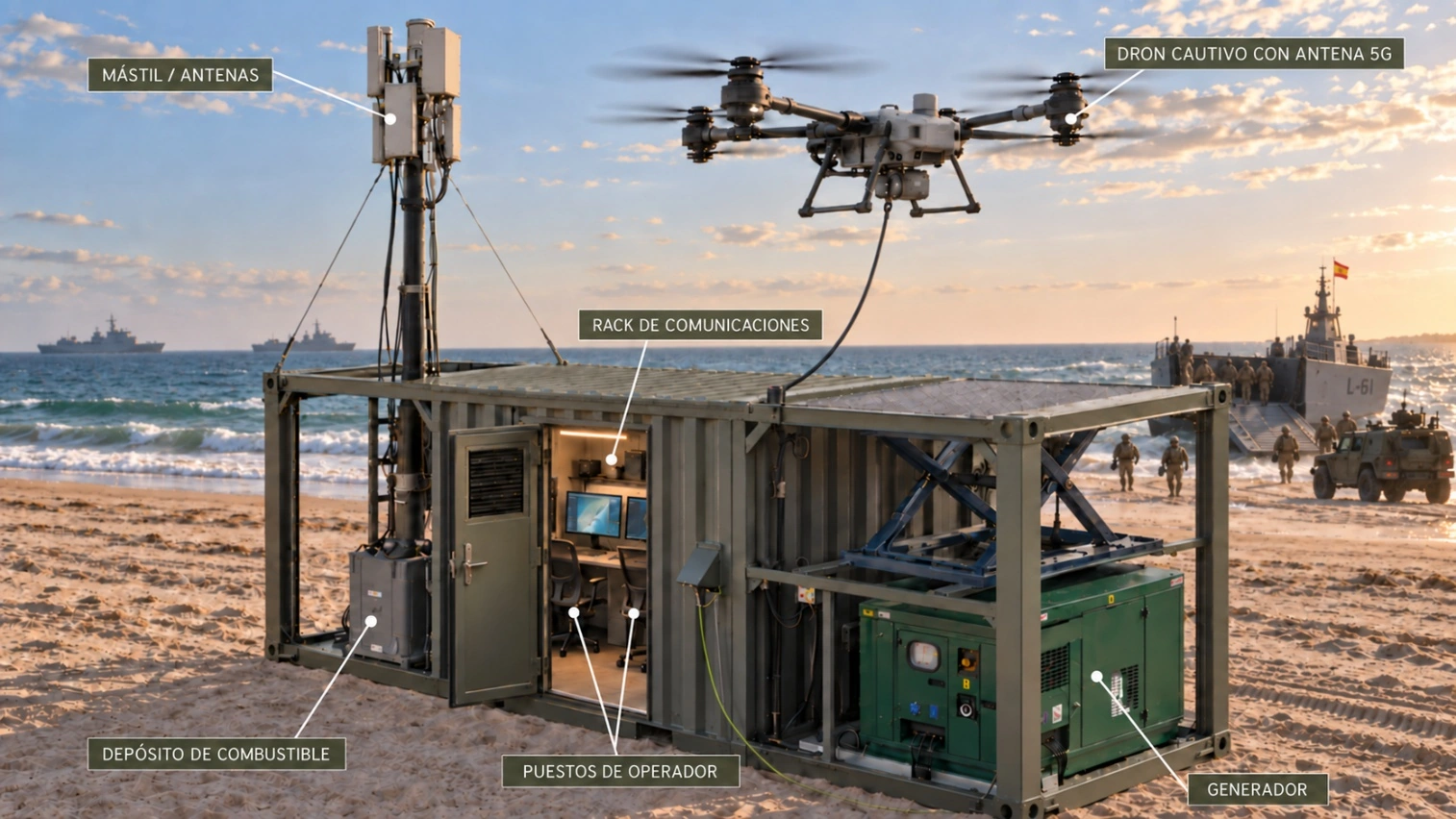
Deployable systems
Transportable solutions, such as shelters and operational modules, to establish command and control capabilities wherever they are needed.
Flexible architecture, including infrastructure
C2LYNX supports different technology deployment models, adapting to each organisation’s availability, connectivity and security requirements.
Cloud
Commercial cloud infrastructure
On-premise
Local or private infrastructure
Distributed
Nodes and services distributed across locations.
INTEROPERABILITY AND INTEGRATION
An ecosystem of connected systems
An open architecture to integrate different uncrewed vehicles, sensors and information sources in a shared operational environment.
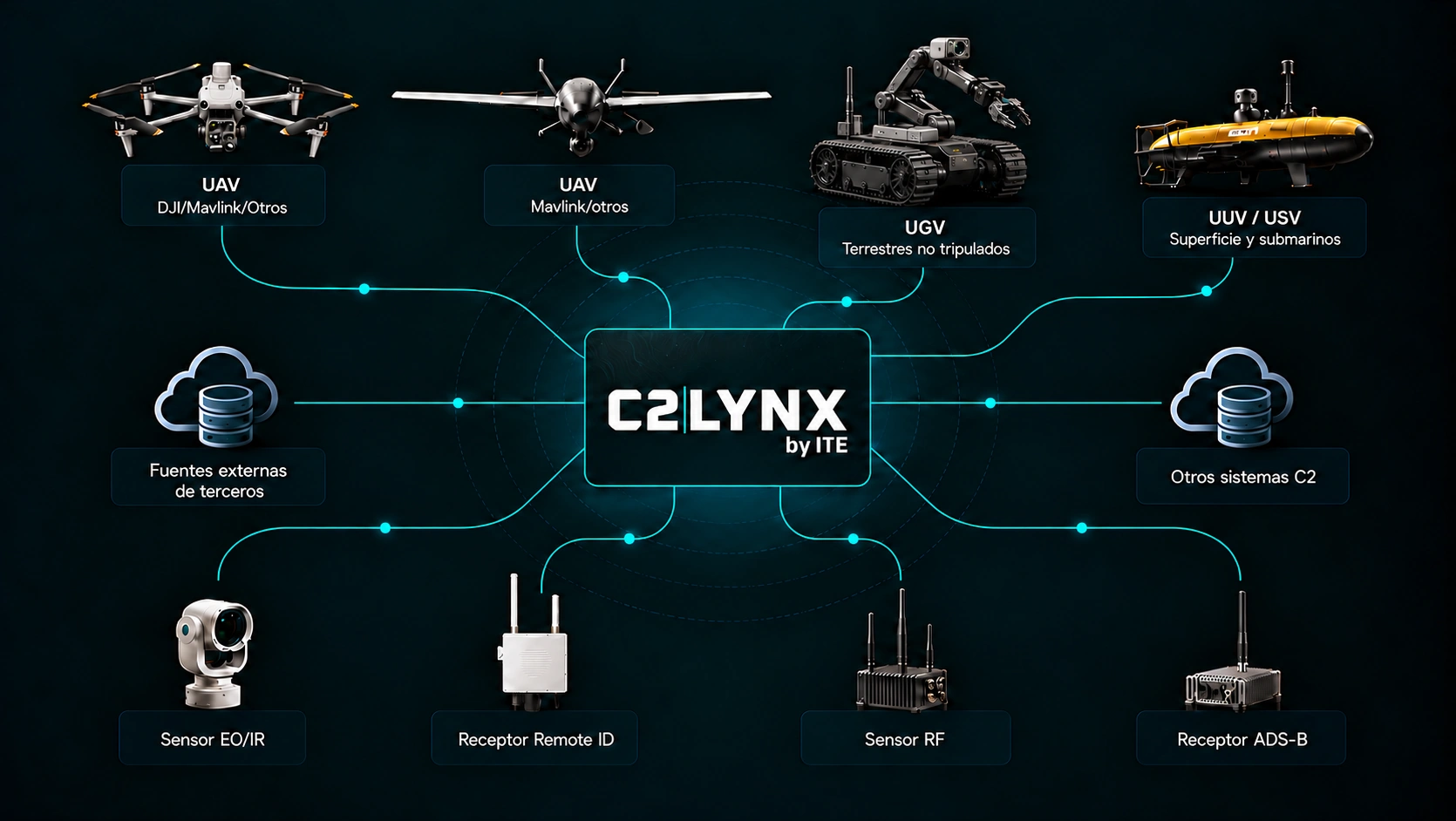
Platform integration
C2LYNX enables different types of uncrewed vehicles to be integrated and managed, including aerial (UAV), ground (UGV) and maritime (USV/UUV) platforms, providing a common environment for their control, coordination and monitoring.
The platform supports DJI systems and MAVLink-based vehicles, as well as specific integrations developed for other platforms. Its architecture allows new manufacturers and protocols to be incorporated through development tailored to each project’s requirements.
Sensors and information sources
C2LYNX is designed to integrate information from different sensors, detection systems and external data sources, providing a unified view of the operational environment.
Its architecture facilitates the incorporation of technologies such as radar, RF, electro-optical and infrared (EO/IR) sensors, acoustic systems and air traffic information sources, including ADS-B and Remote ID.
Through correlation and multisensor fusion capabilities, the platform combines information from different sources to improve situational awareness, facilitate target tracking and support decision-making.
TECHNOLOGY ARCHITECTURE AND COMMUNICATIONS
A distributed architecture, ready for different communications environments
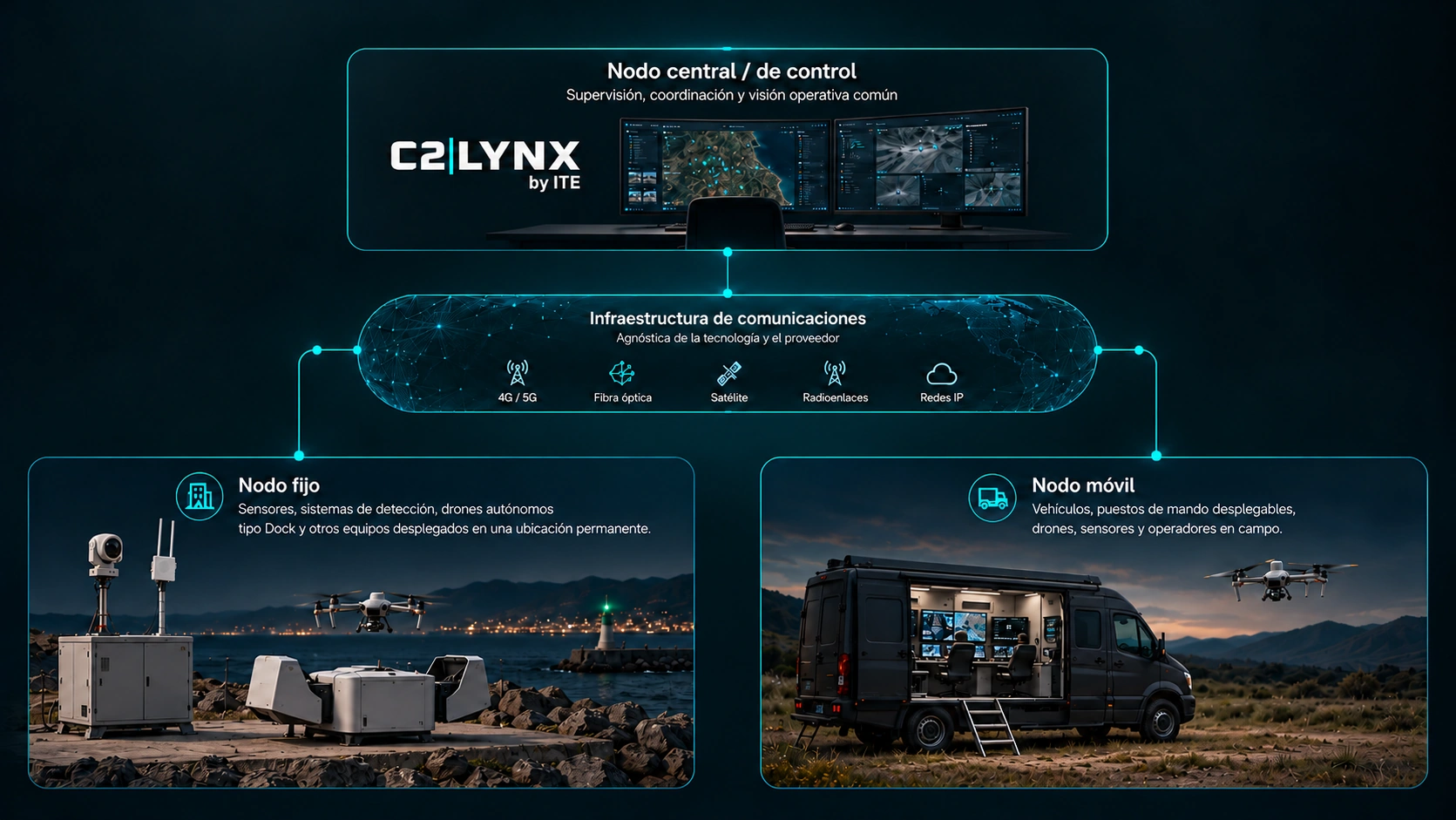
C2LYNX supports distributed architectures in which different fixed or mobile operational nodes connect to one or more control and monitoring nodes.
Each node can integrate uncrewed vehicles, sensors and other systems, sharing the information required to maintain a Common Operational Picture.
The platform is communications-infrastructure agnostic and can adapt to IP networks, fibre optics, mobile networks, radio links or satellite communications, according to each project’s requirements and available resources.